Table of Contents
At Techglock Software Solutions, we've delivered over 100 projects across web, mobile, and enterprise platforms. As AI capabilities have evolved rapidly, we've been intentional about integrating them into our development process — not to replace our developers, but to amplify their skills and ship better products faster.
This article shares our hands-on experience with AI-assisted development: what works, what doesn't, and how we maintain the quality standards our clients expect.
Why We Integrated AI Into Our Workflow
The decision to bring AI into our development pipeline wasn't about following a trend. It came from a practical challenge every agency faces: delivering high-quality software faster while managing costs for our clients. With projects spanning React, Angular, Node.js, Laravel, and mobile platforms, we needed tools that could keep up with the breadth of our technology stack.
Our developers have 6+ years of experience each, so the goal was never to replace expertise — it was to eliminate repetitive tasks that eat into creative problem-solving time. We estimated that roughly 30-40% of development time was spent on boilerplate code, documentation, and standard patterns that don't require deep thinking.
The AI Tools We Rely On
After extensive evaluation, we settled on a focused toolkit:
OpenAI GPT Models
We use GPT models primarily for generating boilerplate code, writing API documentation, and creating test cases. The models excel at understanding context from existing codebases and producing consistent patterns. For our Laravel and Node.js projects, GPT handles repetitive CRUD operations and validation logic efficiently.
Claude by Anthropic
Claude has become our go-to for code review assistance and architectural discussions. Its ability to analyze large code blocks and identify potential issues — from security vulnerabilities to performance bottlenecks — has been invaluable. We particularly value its careful, nuanced responses when evaluating trade-offs between different approaches.
GitHub Copilot
For in-editor code completion, Copilot integrates seamlessly into our developers' VS Code workflows. It's especially effective for React and Angular component development, where patterns are predictable but time-consuming to write from scratch.
Key Principle: We never ship AI-generated code without human review. Every line goes through the same code review process as manually written code. AI accelerates the writing — our engineers ensure the quality.
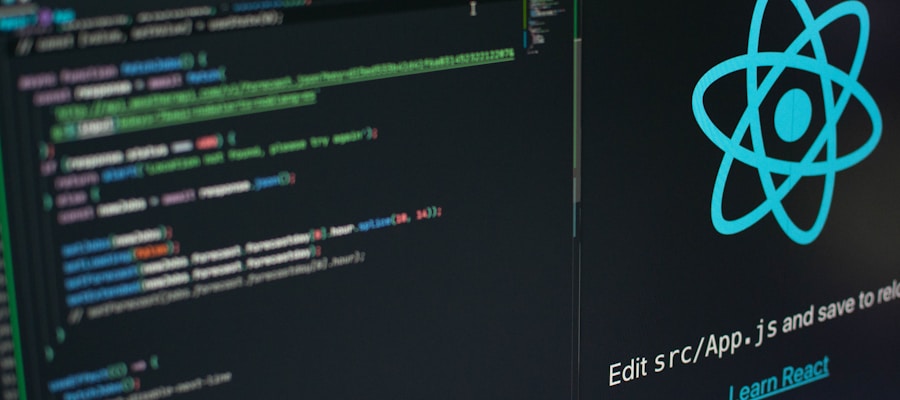
AI for Code Generation & Review
Here's how we typically use AI in our code generation workflow:
Want AI-Accelerated Development for Your Project?
We deliver projects 30-40% faster using AI tools. Let's discuss your timeline.
Get a Free ConsultationStep 1: Define the requirement clearly. We write detailed prompts that include the tech stack, coding conventions, and expected behavior. Vague prompts produce vague code — our developers have learned that investing time in prompt engineering pays off significantly.
Step 2: Generate and iterate. The initial AI output is rarely production-ready. We treat it as a strong first draft. Our developers refine the generated code, adapting it to project-specific patterns and handling edge cases the AI might miss.
Step 3: Review rigorously. AI-generated code goes through the same pull request process as any other code. In fact, we've found that reviewing AI-generated code has sharpened our team's review skills — it teaches you to question assumptions you might otherwise overlook.
Automated Testing with AI
One area where AI has dramatically improved our efficiency is test creation. Writing comprehensive unit and integration tests is critical but time-consuming. We now use AI to generate initial test suites based on our component and API specifications.
For a recent React Native project, AI-generated tests covered 85% of our components within hours — work that would have taken days manually. Our QA team then reviewed, refined, and added edge cases that required domain knowledge. The result was better test coverage in less time.
We also use AI to generate test data and mock API responses, which previously required significant setup time for each project.
AI-Powered Documentation
Documentation is often the first thing that suffers when deadlines tighten. With AI assistance, we've been able to maintain comprehensive documentation without it becoming a bottleneck. Our approach includes generating API documentation from code comments, creating user guides from feature specifications, and producing onboarding docs for project handoffs.
The quality of AI-generated documentation has improved remarkably. Combined with our technical writers' review, we're producing documentation that clients consistently praise — and that reduces support requests post-launch.
Maintaining Quality Standards
The biggest concern with AI-assisted development is quality. Here's how we ensure our standards don't slip:
Strict code review: Every piece of AI-generated code is reviewed by at least one senior developer. We use the same linting rules, type checking, and architectural guidelines regardless of how the code was written.
Security scanning: AI can inadvertently introduce security vulnerabilities — hard-coded values, improper input validation, or insecure patterns. We run automated security scans on all code and conduct manual security reviews for sensitive functionality.
Performance testing: We benchmark AI-generated code against our performance standards. In several cases, we've found that AI-generated solutions, while functional, weren't optimized for our specific use case. Human optimization remains essential.
Client transparency: We're open with our clients about using AI tools. Most appreciate the efficiency gains and the fact that experienced developers still oversee every aspect of their project.
Real Results from Our Projects
Here's what the numbers look like across our recent projects:
- 30-40% reduction in time spent on boilerplate and repetitive code
- 50% faster initial test suite generation
- 2x improvement in documentation completeness
- Zero increase in production bugs (our defect rate has actually decreased)
- 15-20% overall project timeline reduction
These efficiency gains translate directly to value for our clients — faster delivery, lower costs, and more thorough testing and documentation.
What's Next
We're actively exploring several AI-powered capabilities for 2026 and beyond. AI-assisted UI/UX prototyping that generates component layouts from wireframes is showing promise. We're also investing in AI-powered monitoring that predicts production issues before they impact users.
The key is that AI continues to evolve as a tool — one that makes skilled developers more productive, not one that replaces the engineering judgment that comes from years of building real software for real businesses.
"AI is the most powerful accelerator we've added to our toolkit in years. But it's the experience of our team that turns faster code into better software." — Rajesh Thakur
Our software development services are built on this AI-first approach — delivering faster timelines without compromising quality.
For a practical example, see how we integrate AI APIs directly into products in our guide on integrating OpenAI and Claude APIs.
Real Timelines: See our case studies to understand how AI-accelerated delivery works on actual client projects.
Want AI-Powered Development for Your Project?
We combine AI efficiency with 6+ years of engineering experience to deliver faster, better software.
Start a Project →